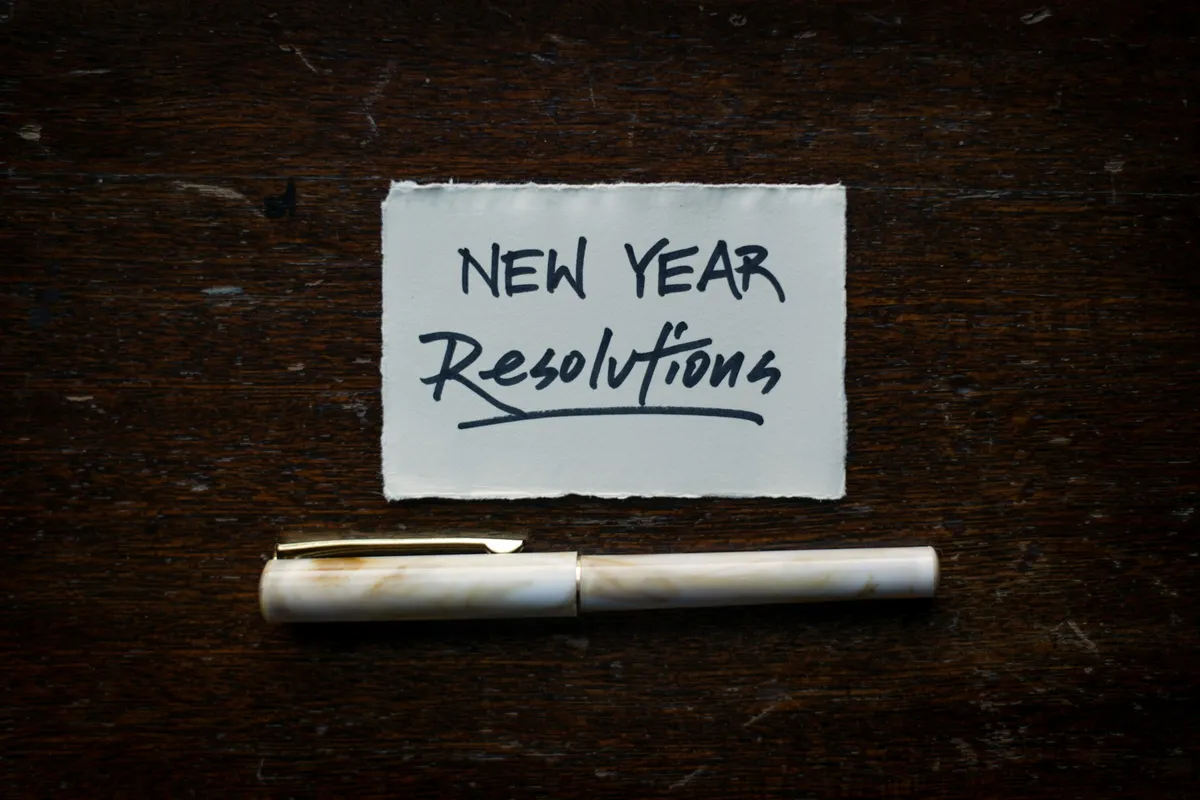
New Year's Resolutions for 2026
I’m writing this in December 2025, and I can’t shake the feeling that the traditional New Year’s resolution—“I’ll go to the gym three times a week”—feels outdated, almost naive. Not because exercise doesn’t matter, but because the ground is shifting beneath us in ways that make optimizing our workout schedule feel like rearranging deck chairs.
AI is coming for knowledge work. The comfortable middle-class jobs—the ones that require thinking, analyzing, creating—are suddenly on the table. We’re spending five to seven hours daily on our phones, feeding algorithms designed to keep us distracted, while the world transforms around us. Job anxiety is real and growing. And here we are, making resolutions about meal prep and morning routines.
Maybe we need a different kind of resolution for 2026. Not about doing more, but about understanding what’s worth doing at all. Not productivity resolutions—humanity resolutions.
Here’s the thing: You won’t do all five of these. Pick one. Maybe two if you’re ambitious. But one good resolution, done well, beats five half-hearted attempts. These aren’t quick fixes or life hacks. They’re foundations for living intentionally in a world that’s increasingly designed to keep us passive, distracted, and uncertain.
Resolution 1: Audit your phone like you audit your food.
Track your screen time for one week. Actually look at the numbers. Don’t just glance at the notification and swipe it away—really look. Then: Delete three apps that consistently make you feel worse. Set up one Time Shield or app blocker for your most vulnerable time of day. Don’t try to quit your phone. Just make it slightly less toxic.
Why this matters in 2026
You can’t live intentionally if you’re spending five hours a day in an algorithm designed to keep you distracted. Your attention is the most valuable resource you have—more valuable than your time, because time without attention is just empty hours scrolling. The algorithm doesn’t want you to be intentional. It wants you engaged, reactive, coming back for one more hit of novelty.
The hard truth
You probably won’t delete Instagram entirely. That’s okay. Small changes compound. The goal isn’t digital abstinence; it’s digital intentionality. It’s the difference between mindlessly opening TikTok when you’re bored and consciously choosing to read for fifteen minutes instead.
How to start
This weekend: Check your screen time report. iPhone: Settings → Screen Time. Android: Digital Wellbeing & Parental Controls. Don’t judge yourself—just observe.
Monday: Delete one app that consistently makes you feel worse. You know which one it is.
This week: Set up boundaries. Use iOS Focus Modes to silence notifications during dinner. Use Activities Matter’s Time Shields to block distracting apps during your peak work hours—like social media before noon or news apps after 8pm. It’s one practical way to protect your attention from your own worst habits.
Resolution 2: Pick one creative thing and do it badly.
Not “create more than you consume”—that’s too vague. Pick ONE thing: write terrible poetry, paint ugly landscapes, build a birdhouse, learn ukulele, make weird digital art. Do it weekly. Sunday morning, Thursday evening—whatever works. Don’t post it. Don’t monetize it. Don’t “build your brand” with it. Just make something with your hands or your mind that didn’t exist before.
Why this matters in 2026
When AI can generate perfect images, perfect code, perfect prose—your terrible, human, imperfect creation is more valuable than ever. We’ve turned every hobby into a side hustle, every skill into leverage, every creative impulse into content. Stop it. Your ability to create something for no reason other than the joy of making it—even if you’re bad at it—is the most human thing you have.
The hard truth
It will feel pointless at first. You’ll be bad at it. That’s the entire point. In a world optimizing for output and efficiency, making something “useless” is an act of resistance. It’s reclaiming creativity from capitalism, art from algorithms, play from productivity.
How to start
Pick the thing that sounds most fun—not most impressive, not most marketable. The thing that makes you think, “That would be cool, but I’d be terrible at it.” Perfect. That’s the one.
Schedule thirty minutes this Sunday. Put it on the calendar like it’s a meeting. Because it is—a meeting with the part of yourself that creates for no reason.
Buy or download the simplest tools. Cheap watercolors. Free ukulele app. Blank notebook. Don’t wait for the perfect setup. That’s procrastination dressed as preparation.
Make something terrible and feel proud about it. Create an activity in Activities Matter called “Creative Sunday” or “Tuesday Painting” and set a weekly commitment to it. The app will gently remind you—and over time, you’ll see the pattern of showing up for yourself week after week, even when it feels pointless.
Resolution 3: Choose three people. Protect that time like it’s sacred.
Not “invest in relationships”—that’s abstract. Identify three specific people who make you feel most human. Not the people you should spend time with. Not the ones who are useful for your career. The ones who make you feel most yourself. Put recurring time on the calendar—monthly dinner, weekly call, whatever actually fits your life. Actually show up. These are what Aristotle called “virtue friendships”—relationships that make you better just by existing.
Why this matters in 2026
As work becomes more automated and digital, your deepest relationships become your most valuable asset. AI can simulate conversation, answer your questions, even provide therapy-adjacent support. But it can’t replace presence. It can’t replace the specific, irreplaceable experience of being known by another human being.
We’ve optimized for connection—1,000 LinkedIn contacts, 800 Instagram followers—at the expense of communion. Three real friends trump 300 casual acquaintances when you’re questioning everything at 2am or celebrating a small victory no one else would understand.
The hard truth
You’ll cancel sometimes. You’ll go months without seeing them. Life is busy and complicated, and good intentions collide with deadlines and sick kids and exhaustion. The difference between people who maintain deep friendships and people who don’t isn’t perfection—it’s persistence. It’s texting “Sorry I dropped off the planet, coffee next week?” instead of letting guilt turn into distance.
How to start
This week: Write down three names. Not a mental note—actually write them down. The people who make you feel most yourself, not most productive or most impressive.
Text them: “Want to set up a recurring [coffee/call/dinner]? I want to be more intentional about staying connected.” Most people will say yes. Everyone is lonely and busy and meaning to reach out.
Put it on the calendar before you forget. Recurring event. Monthly or quarterly—whatever you can actually sustain.
Use Activities Matter to set a commitment: “See [Friend’s Name] - 1x per month.” The app will track whether you’re honoring this intention—not to guilt you, but to help you see if you’re actually protecting what matters most. Log these hangouts in your journal. Over time, you’ll see which relationships energize you and which ones drain you. That’s not judgment—it’s information.
Resolution 4: Stop asking AI for answers. Start using it to learn.
When you have a question, don’t ask ChatGPT for the answer. Instead, ask it to explain the topic from first principles. Ask it to recommend three reputable sources. Ask it to show you both sides of any debate. Ask it to help you understand the nuance, the history, the controversy. Then go read those sources yourself. Use AI as a research assistant, not a replacement for thinking.
Why this matters in 2026
If AI does all the thinking for us, we atrophy. If AI helps us think better, we grow. The person who understands why something is true—who can trace the reasoning, weigh the evidence, spot the weak points—has something AI can’t replicate: judgment. In a world where everyone has access to the same AI-generated answers, your ability to think critically is your competitive advantage.
The hard truth
This is slower than just getting the answer. It requires more effort. That’s precisely why it matters. Easy answers create intellectual dependency. You become the person who can recite facts but can’t evaluate arguments, who knows what to think but not how to think.
Hard learning creates capability. It builds the mental muscles you’ll need when the easy answers are wrong, incomplete, or misleading. And they will be—AI is trained on human text, which means it inherits all of our biases, errors, and blind spots.
How to start
Next time you reach for ChatGPT or Claude with a question, pause. Reframe your prompt: “I want to understand [topic]. Can you explain the fundamentals, recommend three sources from different perspectives, and show me where experts disagree?”
Spend thirty minutes exploring those sources. Read the articles. Watch the videos. Take notes. Notice how much deeper your understanding becomes when you do the work instead of outsourcing it.
Journal your learning journey in Activities Matter. What did you learn? What surprised you? What questions emerged? The app’s AI Reflections can help you process what you’re discovering—not by giving you answers, but by asking you better questions. It’s the difference between being fed information and building understanding.
Resolution 5: Ask “What would I do if my job changed radically?”
This isn’t about quitting your job tomorrow. It’s about building a foundation that can withstand disruption. The exercise: If AI made your role obsolete in twelve months, what would you do? What would you build? Who would you help? What problems would you solve? What would bring you meaning? Start exploring that now—even if just as a thought experiment. Take one small action per month toward that vision: a course, a conversation, a side project, a skill.
Why this matters in 2026
This isn’t pessimism. It’s preparation. The question isn’t if AI disrupts your industry, it’s when. Lawyers are watching AI draft contracts. Programmers are watching it write code. Designers are watching it generate mockups. Teachers, accountants, marketers, analysts—everyone with a knowledge-work job is watching the ground shift.
The people who’ve thought about this won’t panic when it happens. They’ll have options. They’ll have started building something. They’ll know what they value beyond a job title and a paycheck. Job security is dead. Purpose security is the new foundation.
The hard truth
This resolution will make you uncomfortable. It might reveal that you don’t actually like your current path. It might force you to admit that you’re staying in a role for reasons that won’t matter if that role disappears. It might show you that you’ve optimized for salary and status at the expense of meaning and resilience.
That discomfort is information. Better to face it now than in crisis mode when the layoffs start and you’re scrambling to figure out who you are without your job.
How to start
Set aside two hours this month for the thought experiment. Go somewhere you won’t be interrupted. Bring a notebook or open a blank document.
Write down: “If my job disappeared tomorrow, I would…” Don’t censor yourself. Don’t write what sounds responsible or realistic. Write the truth. The thing you’d do if money weren’t the primary constraint. The problem you’d want to solve. The people you’d want to help.
Take one tiny action this month. A conversation with someone in that field. A book. An online course. A weekend experiment. Something that moves you from wondering to exploring.
Revisit quarterly. Set a recurring reminder. Your answer will change as you learn more about yourself and the world. That’s good—it means you’re growing.
Use Activities Matter’s AI Reflections to explore this question deeply. The app will analyze your journal entries—your values, your patterns, your energy levels—and generate personalized prompts to help you understand what truly matters to you. Not what should matter. What does.
Set a quarterly goal: “Explore alternative path.” Log your experiments, conversations, and discoveries. Over time, you’ll build a map of possibilities. The Insights dashboard will show you: Are you actually spending time on this? Or is it just something you think about while scrolling at midnight?
The Only Resolution That Matters
Maybe the most radical resolution for 2026 is this: Stop trying to beat the machines at being machines.
We won’t out-process AI. We won’t out-analyze it. We won’t out-optimize it. That game is over before it started.
But we can out-mean it.
We can ask: What’s worth doing? Who’s worth loving? What’s worth building? These aren’t productivity questions. They’re human questions. And in a world increasingly run by algorithms and automation, they might be the only questions that matter.
You don’t need all five resolutions. You need one, done well. Pick the one that makes you most uncomfortable—that’s probably the one you need. Not because discomfort is good, but because it means you’re growing toward something real, something that can’t be automated or outsourced or optimized away.
The gap between knowing what we should do and actually doing it? It closes with one intentional choice, not another saved post about self-improvement.
Photo by Tim Mossholder on Unsplash
Related Articles

Finding Your Values: The Framework That Actually Helps
A practical guide to discovering your core values through pattern recognition across life domains, helping you make decisions aligned with what actually matters to you.

Beyond the Graphs: How Activities Matter Can Truly Change Your Life
You've tracked your moods and activities in Activities Matter, but what's next? Learn how to move beyond data collection and use the app to generate actionable insights that create real change.
The Quantified Self: When Numbers Became a Mirror
An exploration of the Quantified Self movement—its promise of self-knowledge through data, its darker implications, and how we're trying to find a middle path with Activities Matter.